Semax and Selank:
Exploring Two Promising Peptides in Neuroscience Research A closer look at cognitive performance, stress regulation, neuroprotection, clinical research, and international medical applications In the rapidly

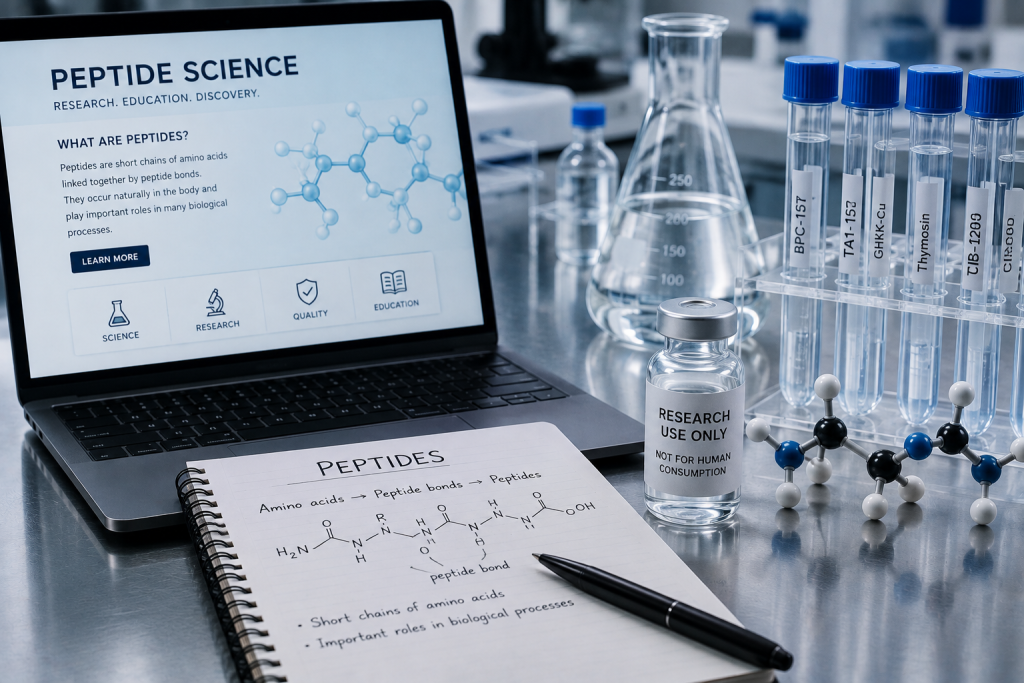
Peptides have become an increasingly prominent topic in scientific research, biotechnology, and pharmaceutical development. While the word peptide may sound highly technical, the basic concept is fairly straightforward: peptides are short chains of amino acids linked together by chemical bonds called peptide bonds.
Amino acids are often described as the building blocks of proteins. When amino acids join together in relatively short chains, they form peptides. Longer, more complex chains can form proteins.
Despite their relatively simple definition, peptides can have remarkably diverse biological functions—which is exactly why researchers are so interested in them.
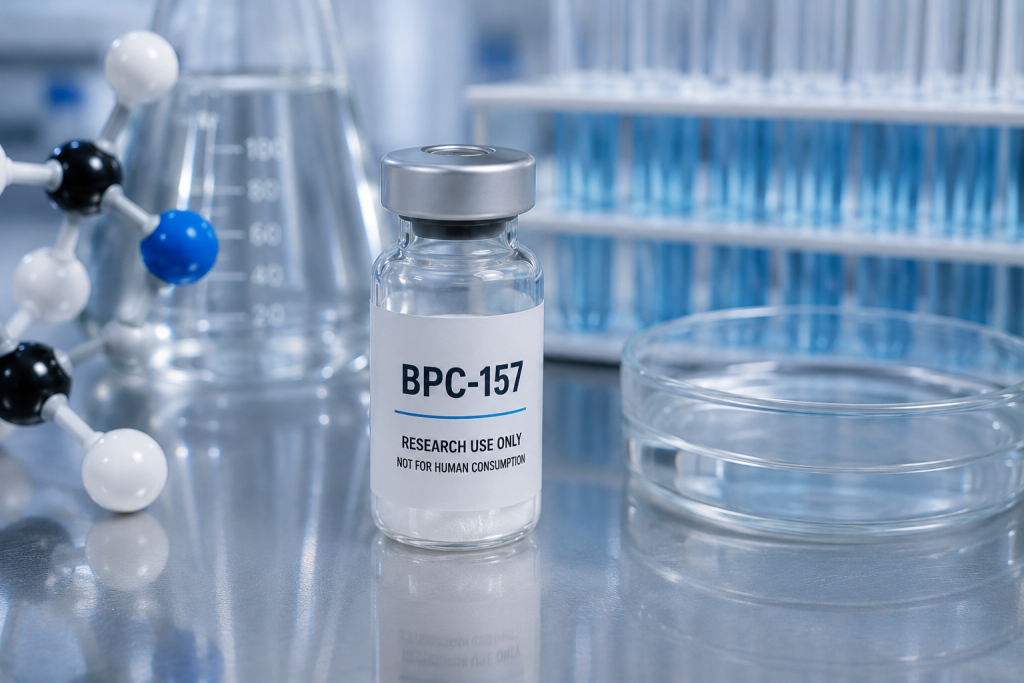
BPC-157 has become one of the most talked-about compounds in the peptide research world, particularly in conversations surrounding tissue repair, tendons, ligaments, gastrointestinal research, and recovery.
But its online reputation has moved considerably faster than the clinical evidence.
Most of what scientists currently know about BPC-157 comes from preclinical research, including laboratory and animal studies. Human research exists, but it remains small and preliminary. A 2025 systematic review examining its use in orthopedic and sports-medicine research found 36 eligible studies—35 were preclinical and only one was clinical.
So what exactly is BPC-157, and what does the research actually tell us?
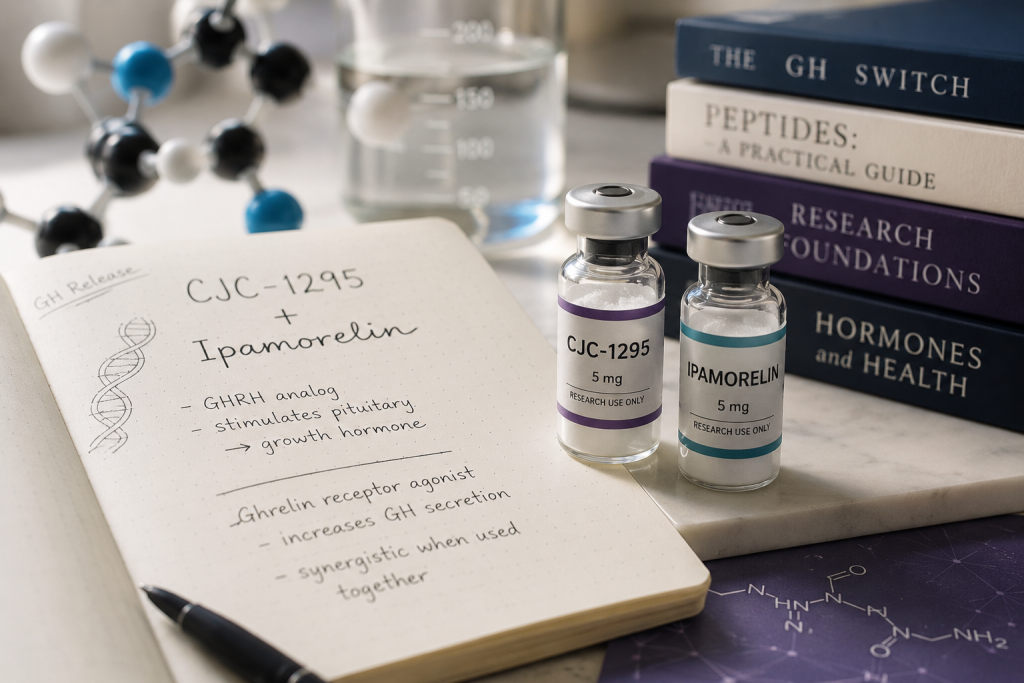
Spend five minutes browsing the peptide world and you’ll probably encounter CJC-1295 and ipamorelin as a pair.
They’re discussed together so frequently that it’s easy to assume they’re essentially two versions of the same thing. They’re not.
Both are associated with growth hormone (GH) signaling, but they approach that system through different biological pathways. That difference is the main reason researchers—and eventually the gray-market peptide community—became interested in combining them.
There is human research demonstrating that CJC-1295 can substantially increase GH and IGF-1 concentrations. Ipamorelin has also been administered to humans in clinical research and shown to stimulate GH release. What we don’t have is equally strong clinical evidence showing that the popular CJC-1295/ipamorelin combination produces the long list of body-composition, recovery, sleep, muscle-building, and anti-aging benefits commonly attributed to it online.

When most people hear the word peptide, they think of compounds such as BPC-157, GHK-Cu, TB-500, or growth-hormone-related peptides.
But there’s another category that operates under a very different research framework: peptide bioregulators.
These compounds are associated primarily with decades of work by Russian gerontologist Vladimir Khavinson and colleagues, who investigated extremely short peptide sequences—often only a few amino acids long—and proposed that some could influence cellular activity and gene expression.
That makes bioregulators particularly interesting because the theory behind them isn’t simply:
peptide → receptor → biological response.
Instead, much of the research asks whether very short peptides can participate in the regulation of gene expression, protein synthesis, cellular aging, and tissue-specific biological processes.
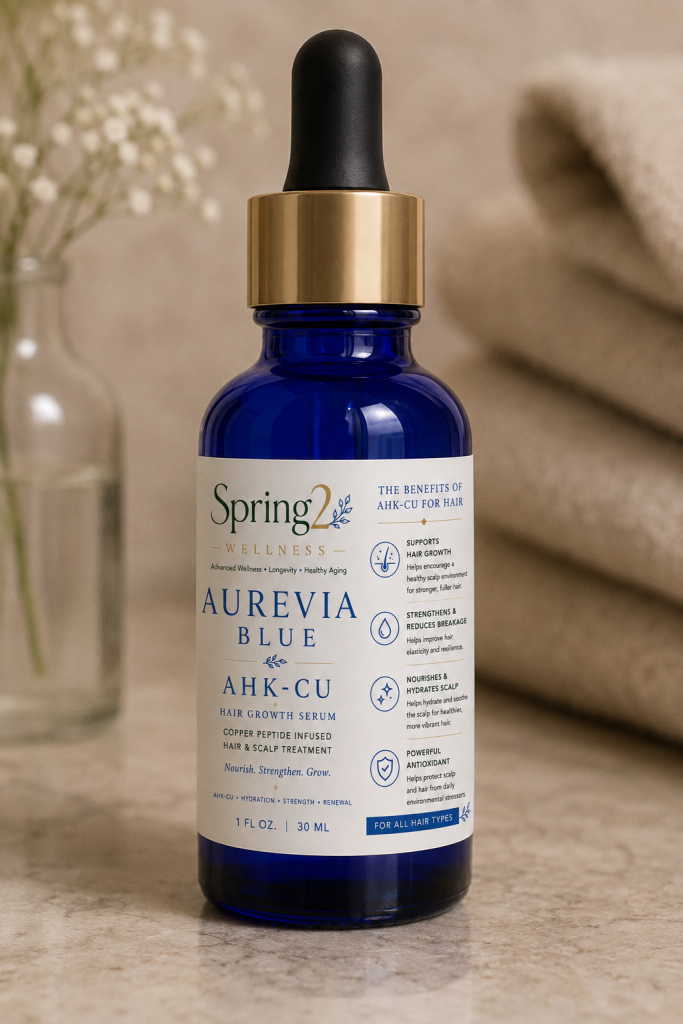
Hair-growth products are full of ingredients promising thicker, stronger, faster-growing hair. Copper peptides have earned a particularly interesting place in that conversation—and AHK-Cu is one of the lesser-known compounds behind it.
AHK-Cu is a copper-binding peptide formed when the tripeptide AHK (alanine-histidine-lysine) complexes with copper.
If that sounds familiar, there’s a reason.
Its better-known relative, GHK-Cu, is another naturally occurring copper-binding tripeptide that has been studied extensively for its involvement in wound healing, extracellular-matrix remodeling and skin biology.
AHK-Cu, however, has attracted specific research interest for something else:
the human hair follicle.
Spend five minutes browsing the peptide world and you’ll probably encounter CJC-1295 and ipamorelin as a pair.
They’re discussed together so frequently that it’s easy to assume they’re essentially two versions of the same thing. They’re not.
Both are associated with growth hormone (GH) signaling, but they approach that system through different biological pathways. That difference is the main reason researchers—and eventually the gray-market peptide community—became interested in combining them.
There is human research demonstrating that CJC-1295 can substantially increase GH and IGF-1 concentrations. Ipamorelin has also been administered to humans in clinical research and shown to stimulate GH release. What we don’t have is equally strong clinical evidence showing that the popular CJC-1295/ipamorelin combination produces the long list of body-composition, recovery, sleep, muscle-building, and anti-aging benefits commonly attributed to it online.
When most people hear the word peptide, they think of compounds such as BPC-157, GHK-Cu, TB-500, or growth-hormone-related peptides.
But there’s another category that operates under a very different research framework: peptide bioregulators.
These compounds are associated primarily with decades of work by Russian gerontologist Vladimir Khavinson and colleagues, who investigated extremely short peptide sequences—often only a few amino acids long—and proposed that some could influence cellular activity and gene expression.
That makes bioregulators particularly interesting because the theory behind them isn’t simply:
peptide → receptor → biological response.
Instead, much of the research asks whether very short peptides can participate in the regulation of gene expression, protein synthesis, cellular aging, and tissue-specific biological processes.
Hair-growth products are full of ingredients promising thicker, stronger, faster-growing hair. Copper peptides have earned a particularly interesting place in that conversation—and AHK-Cu is one of the lesser-known compounds behind it.
AHK-Cu is a copper-binding peptide formed when the tripeptide AHK (alanine-histidine-lysine) complexes with copper.
If that sounds familiar, there’s a reason.
Its better-known relative, GHK-Cu, is another naturally occurring copper-binding tripeptide that has been studied extensively for its involvement in wound healing, extracellular-matrix remodeling and skin biology.
AHK-Cu, however, has attracted specific research interest for something else:
the human hair follicle.