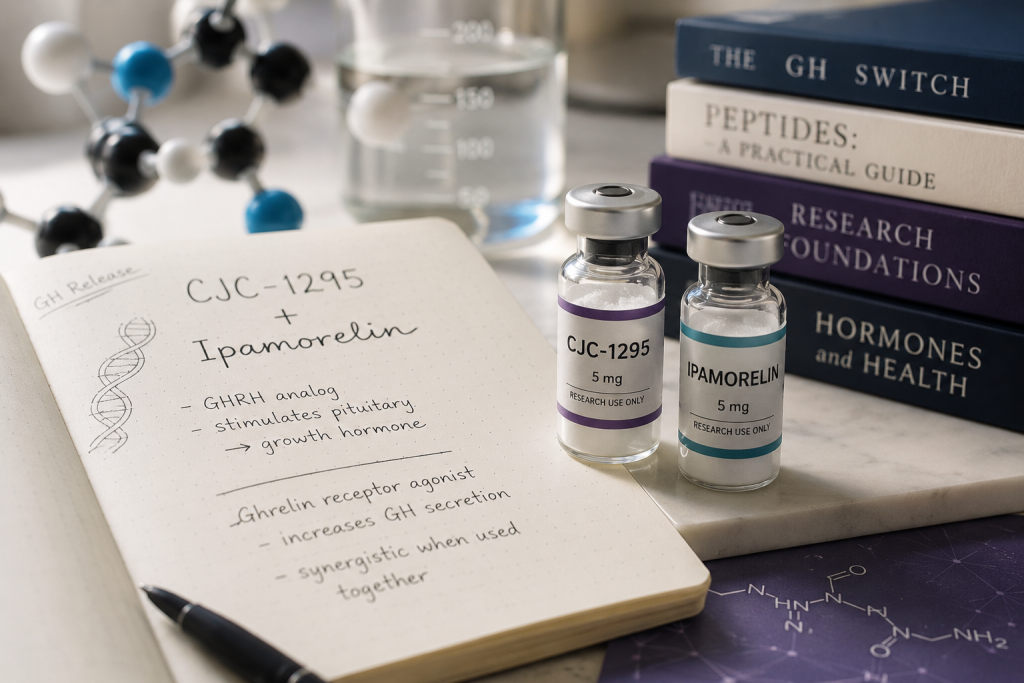
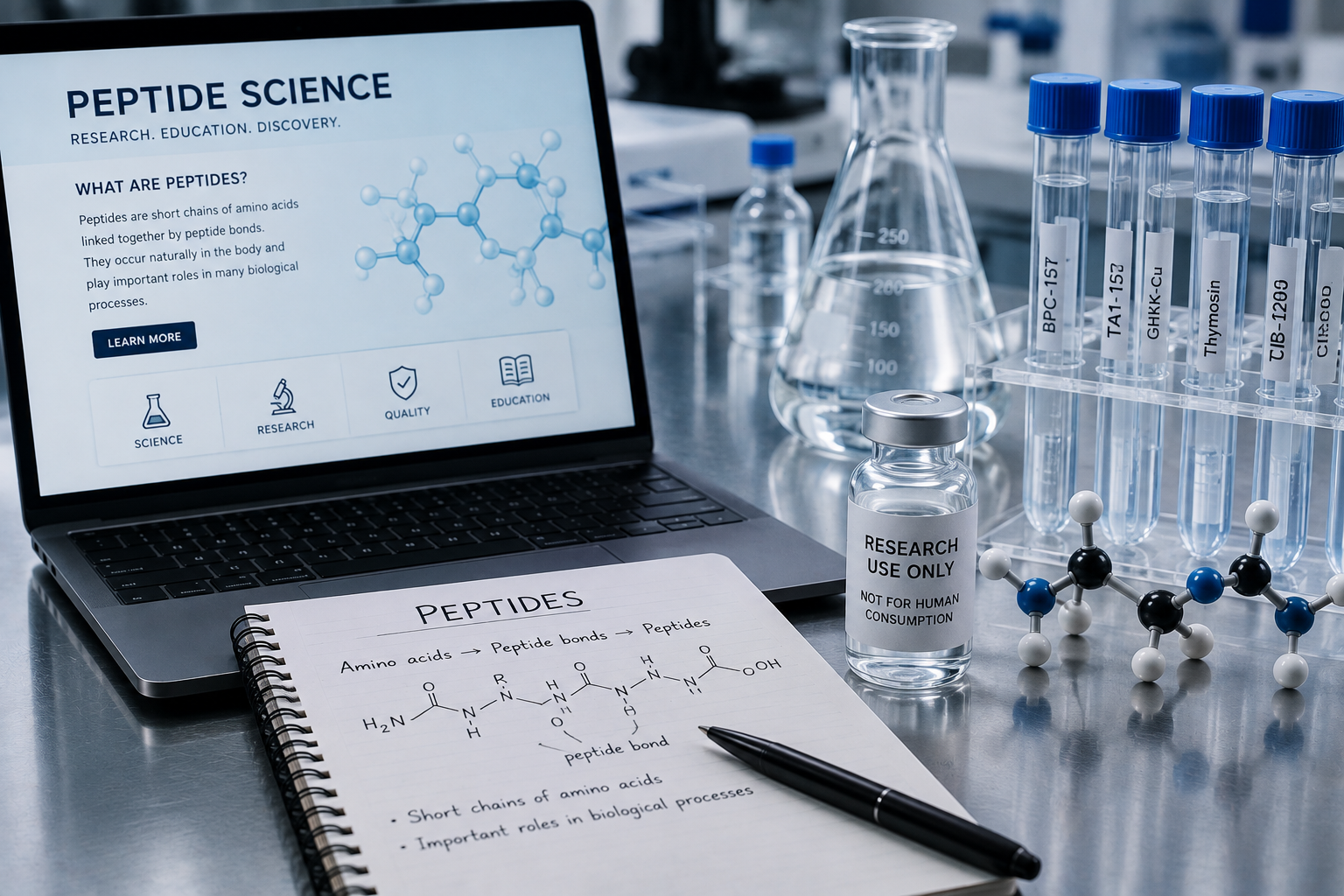
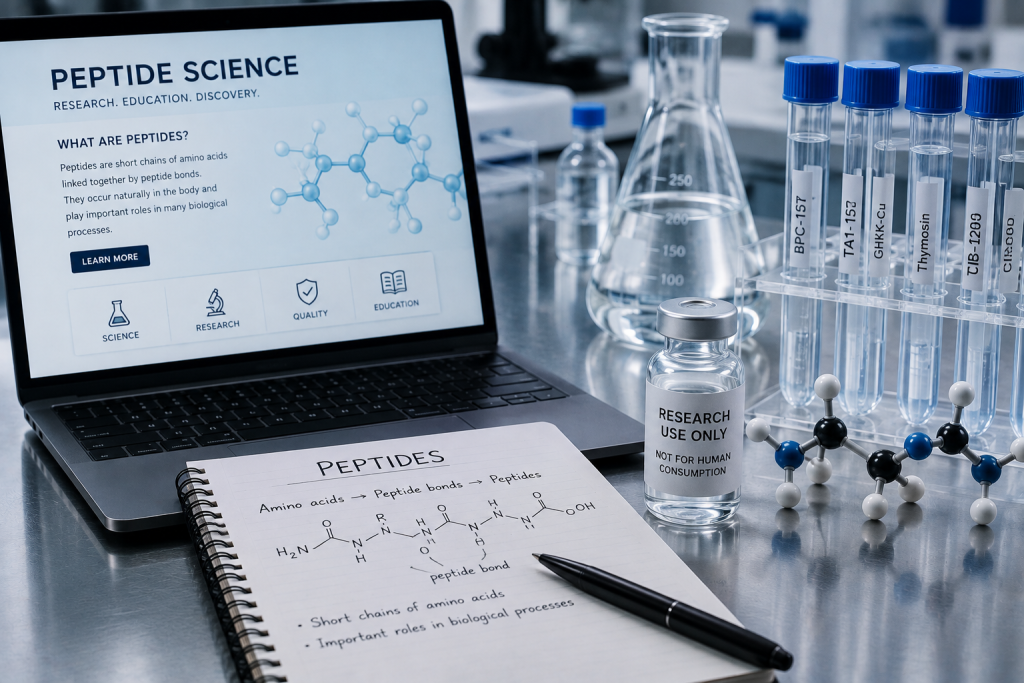
Peptides have become an increasingly prominent topic in scientific research, biotechnology, and pharmaceutical development. While the word peptide may sound highly technical, the basic concept is fairly straightforward: peptides are short chains of amino acids linked together by chemical bonds called peptide bonds.
Amino acids are often described as the building blocks of proteins. When amino acids join together in relatively short chains, they form peptides. Longer, more complex chains can form proteins.
Despite their relatively simple definition, peptides can have remarkably diverse biological functions—which is exactly why researchers are so interested in them.
What Do Peptides Do?
Naturally occurring peptides are found throughout living organisms and participate in many biological processes. Depending on their structure, peptides may function as signaling molecules, hormones, neurotransmitters, antimicrobial agents, or components involved in cellular communication.
Their effects are highly specific. The order of amino acids in a peptide determines its three-dimensional structure and influences how it interacts with receptors, enzymes, cells, and other biological molecules.
Think of the amino-acid sequence as a molecular instruction set. Changing even one part of that sequence can sometimes significantly alter how the peptide behaves.
Peptides vs. Proteins: What’s the Difference?
Peptides and proteins are both composed of amino acids, so the distinction can sometimes become blurry.
Generally, peptides are shorter amino-acid chains, while proteins are larger molecules that often fold into complex three-dimensional structures. There isn’t one universally agreed-upon length at which a peptide suddenly becomes a protein, however.
This is why scientific literature may occasionally use terms such as polypeptide when discussing longer amino-acid chains.
The important takeaway is that peptides and proteins belong to the same broad molecular family but can differ substantially in size, structure, and biological function.
Why Are Peptides Studied?
One reason peptide research covers so many different fields is the sheer variety of peptides that exist.
Researchers investigate peptide signaling and interactions in areas including metabolism, endocrine signaling, immune function, neurological processes, tissue biology, cellular repair mechanisms, inflammation, aging biology, and many other physiological systems.
Importantly, investigating a compound does not establish that it is safe or effective for treating a medical condition. Many compounds discussed in peptide research remain experimental, and the quality and amount of evidence vary considerably from one peptide to another.
Natural, Synthetic, and Modified Peptides
Not every peptide encountered in research is identical to something produced naturally in the body.
Researchers can synthesize peptides in laboratories, allowing specific amino-acid sequences to be studied under controlled conditions. Scientists can also modify peptide structures to investigate how those changes affect properties such as receptor interactions, stability, or degradation.
This ability to create and modify peptide sequences has made peptide chemistry an important area of biotechnology and drug-development research.
Some peptide-based medicines have successfully gone through the regulatory approval process and are used clinically. Other peptides remain research compounds, or have not yet passed clinical testing.
That distinction matters.
How Is Peptide Research Evaluated?
Not all research carries the same weight.
Early laboratory experiments may examine how a peptide interacts with isolated cells, enzymes, or receptors. Animal studies can provide additional information about biological activity, but results observed in animals don’t automatically translate to humans.
Human clinical trials provide another level of evidence and are generally conducted in phases designed to answer questions about safety, dosing, effectiveness, and adverse effects.
When evaluating claims about a peptide, it’s therefore important to ask:
- Has it primarily been studied in cells?
- Has it been studied in animals?
- Are controlled human trials available?
- How large and well-designed were those studies?
- Have the findings been independently replicated?
- Is the compound approved by the FDA for the claimed purpose?
A peptide being “studied” can mean something very different from a peptide having strong clinical evidence behind it.
What Does Peptide Purity Mean?
You’ll frequently encounter discussions of purity when reading about research peptides.
Analytical testing can be used to examine the composition and identity of a laboratory sample. Techniques commonly encountered in peptide research and quality analysis include high-performance liquid chromatography (HPLC) and mass spectrometry.
These methods can provide different types of information about a sample, which means a single percentage or laboratory result shouldn’t necessarily be interpreted as telling you everything about its identity, quantity, sterility, or suitability for a particular purpose.
We’ll cover analytical testing and certificates of analysis separately in our Testing & Quality section.
What Is Bacteriostatic Water?
Another term commonly encountered around peptide research is bacteriostatic water, often shortened to BAC water.
Bacteriostatic Water for Injection is sterile water containing a bacteriostatic preservative, commonly benzyl alcohol. BAC water is what is used to dissolve the peptide from its powder form and change it into a liquid form. Most peptides are sold in a lyophilized (aka Freeze Dried) powder form and require reconstitution with a diluent (liquid). Many peptide vials are meant to be “pulled” from multiple times, as they contain multiple doses. The alcohol in the sterile water maintains the sterility of the solution through multiple draws of a vial.
Many times people ask how much BAC water they are supposed to use when reconstituting a peptide. There is no set amount of BAC water to add in order to reconstitute a peptide. You can add more or less, and the resulting solution will be more or less diluted. You can use a peptide calculator to play around with amounts – One is located here: https://yourpepcalc.com/
Research Peptides vs. FDA-Approved Peptide Drugs
This is one of the most important distinctions to understand when entering the peptide-research world.
Some peptide or peptide-related drugs have been evaluated through clinical trials and approved by the U.S. Food and Drug Administration for specific medical indications.
A compound sold or discussed as a research peptide may not have gone through that process.
When the term “research use only” is on a peptide, it means that they are not approved medications, and are not being sold as such. They are being sold as CHEMICALS for lab study.
Throughout Your Pep Research, we’ll clearly distinguish between established scientific evidence, preliminary findings, ongoing research, and unsupported claims whenever possible.
Learning to Read Peptide Claims Critically
The peptide space contains fascinating legitimate research—but it also contains a tremendous amount of marketing.
You’ll encounter dramatic claims on social media, forums, websites, podcasts, and advertisements. Some may originate from legitimate scientific findings that have been exaggerated far beyond what the original research actually demonstrated.
Before accepting a claim, look for the underlying evidence.
Was the finding demonstrated in humans, animals, or cells? How many subjects were studied? Was there a control group? Was the research peer reviewed? Does other research support the same conclusion?
Those questions are considerably more useful than simply asking whether a peptide “works.”
Where to Go From Here
You don’t need a biochemistry degree to understand peptide research. You simply need a solid foundation and a willingness to separate evidence from hype.
That’s what Your Pep Research is designed to provide.
From here, we’ll explore individual peptide profiles, mechanisms of action, laboratory terminology, analytical testing, research quality, bacteriostatic water, emerging wellness research, and new developments in peptide science.
The goal isn’t to tell you what to use.
It’s to help you understand what the research actually says.
Research & Educational Disclaimer
Content provided by Your Pep Research is intended for general educational and informational purposes. Discussion of a compound does not constitute medical advice, a recommendation for personal use, or evidence that a research compound is safe or effective in humans. Research products labeled for research use only should be handled in accordance with their intended laboratory use. For questions concerning medical treatment, medications, or personal health decisions, consult an appropriately licensed healthcare professional.